
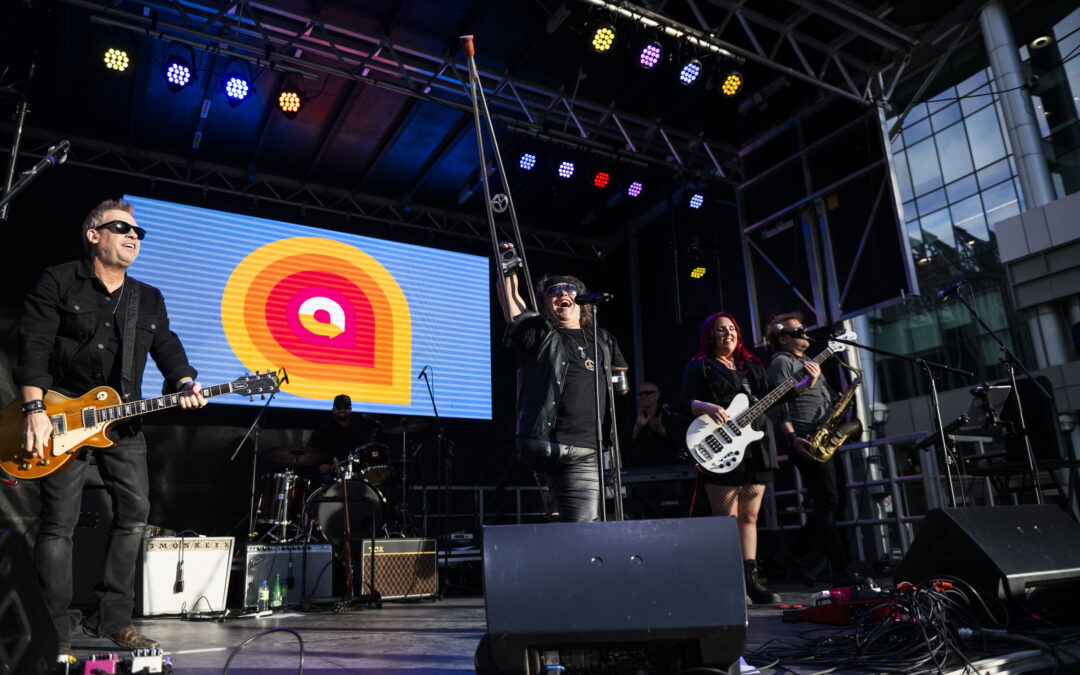
Image is of Martin Deschamps and his team performing on stage at AccessFest 2025.
Recently, our CEO Maayan Ziv wrote a piece for AFAR Magazine that asked: How do festivals really measure up when it comes to meaningful access for disabled attendees?
What We Know
The article tells us the industry is going through a transition. Major festivals like Coachella, Lollapalooza, SXSW, and Glastonbury have begun integrating accessibility features—dedicated viewing platforms, accessible camping areas, ASL interpretation at main stages, companion pass programs, and sensory-friendly spaces. Most of America’s top 100 grossing music festivals now have accessibility compliance departments according to PCMA. This is real, measurable progress that deserves to be celebrated.
But she also talks about barriers that disabled festivalgoers know intimately: there’s still a gap between accommodation on paper and true inclusion in real life.
As the AFAR piece describes it, the current landscape reveals “a patchwork of policies”- some festivals require pre-event verification, others integrate access requests into badge systems, some charge fees for companion tickets while others provide them free. Disabled festival-goers must navigate different systems, different standards, and different levels of commitment at every event they attend.
The truth is, there is no one size-fits-all solution for accessibility. You can build ramps and viewing platforms, train staff, provide ASL and sensory kits – and those are all things festivals should be doing. But if accessibility isn’t genuinely woven into an event from the very beginning, centering the voices and leadership of those with lived experience, it will always feel like an add-on rather than the foundation.
A Different Starting Point
Instead of asking “how do we make this festival accessible?”, what if we asked: “what does a festival look like when disabled people lead from day one?”
That’s the question AccessFest was built to answer.
In May 2025, we held the first-ever AccessFest at David Pecaut Square in downtown Toronto. It was a celebration of meaningful accessibility. Disabled artists, speakers, performers, and creators weren’t guests to be accommodated, they were the ones leading, designing, and centering the experience.
There are many great examples; from chair yoga to Unfiltered AF panel talks, from ASL-performed hip hop to sensory-friendly art installations, from accessibility tours of Toronto’s streets to live demonstrations by TTC Wheel-Trans. AccessFest proved what’s possible when accessibility is not an afterthought.
Progress is Happening, And We’re Part of It
Progress is happening across the festival industry. Accessibility is no longer an afterthought at major events. It’s becoming a prominent aspect in planning and operations, and that shift matters.
But AccessFest represents something more. It’s not just participating in the conversation about how to improve festival accessibility – it’s actively demonstrating what the experience could look like. It’s proof that when disabled people lead, we don’t just meet accessibility standards. We set the standards.
And this year, we’re doing it again.
AccessFest 2026: June 6, Downtown Toronto
We’re thrilled to announce that AccessFest is returning on June 6, 2026, once again at David Pecaut Square in the heart of downtown Toronto during National Accessibility Week.
Year two means building on everything we learned in 2025. It means getting bigger and bolder, and continuing to push the boundaries of what inclusive public festivals can really be.
AccessFest 2026 will once again bring together live performances, panel discussions, art installations, accessibility tours, wellness programming, and community-powered conversations – all designed with access, joy, and equity in mind. Disabled-led. Community-powered. Barrier-free.
Want to get involved?
AccessFest can’t happen without the people who make it possible. We’re looking for volunteers who want to be part of creating one of Canada’s biggest accessibility and arts festivals. Learn more here.
There are plenty of more ways to get involved! Stay tuned for more – sign up for our newsletter or follow AccessFest on Instagram, @access.fest.
AccessFest 2026. June 6. David Pecaut Square.
Join the movement. Learn more at AccessFest.ca.
Latest on the blog
Milano Cortina 2026: Watching the Shift in Access
Photo from the Canadian Paralympic Committee website.The Winter Olympic Games in Milan and Cortina are coming to a close. Records were broken, rivalries were intensified, and fans from all across the world tuned in. Now, attention turns to the Milano Cortina 2026...
Black Disabled Leaders Changing Accessibility
Black disabled leaders have shaped powerful social movements across the world and throughout history. For many of them, their lives sit at the intersection of race and disability - two identities that have historically been marginalized. From this intersection comes...
Does Winter Mean House Arrest for Disabled People?
This years snowstorm brought upon excellent opportunities to enjoy fresh and homemade ice-cream, along with the fun of tobogganing with friends and family. There is joy and beauty in watching the snowfall and spending some serious time binge watching romance with new...
