
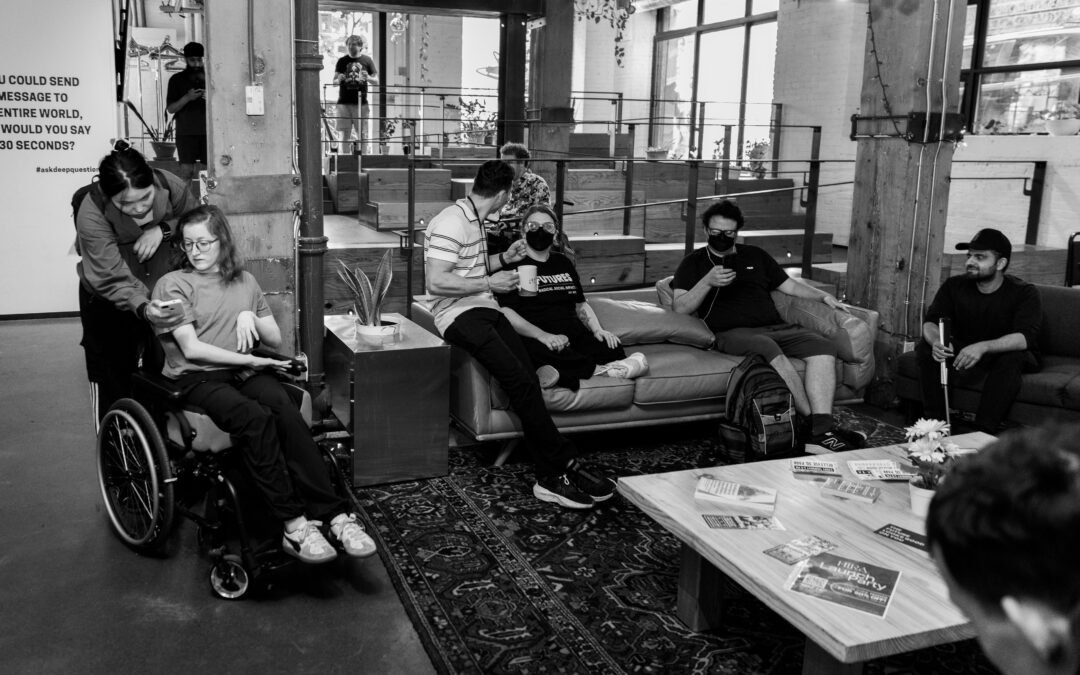
The longitudinal evidence is in. FUTURES — AccessNow’s leadership program for Disabled and neurodivergent young adults aged 18–30 — is not just working. It is working in measurable, repeatable, structurally specific ways.
We just finished compiling three cohort cycles of evidence from the FUTURES program — Spring 2025, Fall 2025, and Winter 2026 — and tracked 60 participants from the moment they applied to the moment they graduated. We used the same system of tracking participants before, during, and after the program.
The findings tell a clear story, and we want to share it with the community that made this program possible: our funders, our partners, our facilitators, our alumni, and the disability advocates across Canada who have been asking what FUTURES actually delivers.
Here is what the data shows:
FUTURES Builds Leaders, and We Can Show You How
Across every domain we measured, participants grew. Disability community knowledge climbed by 1.74 points on a 10-point scale. Leadership skills climbed by 1.26. Social impact skills climbed by 1.13. By program end, 93% of participants reported feeling more able to contribute to communities that mattered to them. 100% of access needs were met across all three seasons.
But the more interesting finding is not that participants improved. It is how they improved. The patterns of growth across the program tell us exactly which design choices are doing the work.
Across every domain we measured, participants grew. Disability community knowledge climbed by 1.74 points on a 10-point scale. Leadership skills climbed by 1.26. Social impact skills climbed by 1.13. By program end, 93% of participants reported feeling more able to contribute to communities that mattered to them. 100% of access needs were met across all three seasons.
But the more interesting finding is not that participants improved. It is how they improved. The patterns of growth across the program tell us exactly which design choices are doing the work.
Finding One: Three Skills, Three Trajectories, One Program
Participants started FUTURES at almost identical baseline scores across three skill domains: roughly 5.3 out of 10 in disability knowledge, leadership, and social impact. By the end, all three had grown, but not in the same way, and not at the same time.
Disability community knowledge grew continuously, from 5.2 at the start to 6.2 at the midpoint to 7.0 at the end. It was the only domain that improved significantly in both halves of the program. This is what happens when disability justice is woven into every session of the curriculum rather than concentrated into a single “disability 101” unit.
Leadership skills grew rapidly in the first half, then held steady. Participants moved from 5.4 to 6.4 in the first six weeks, then to 6.7 by program end. This is the textbook signature of leadership development: rapid acquisition followed by consolidation. People didn’t lose what they had built. They internalized it.
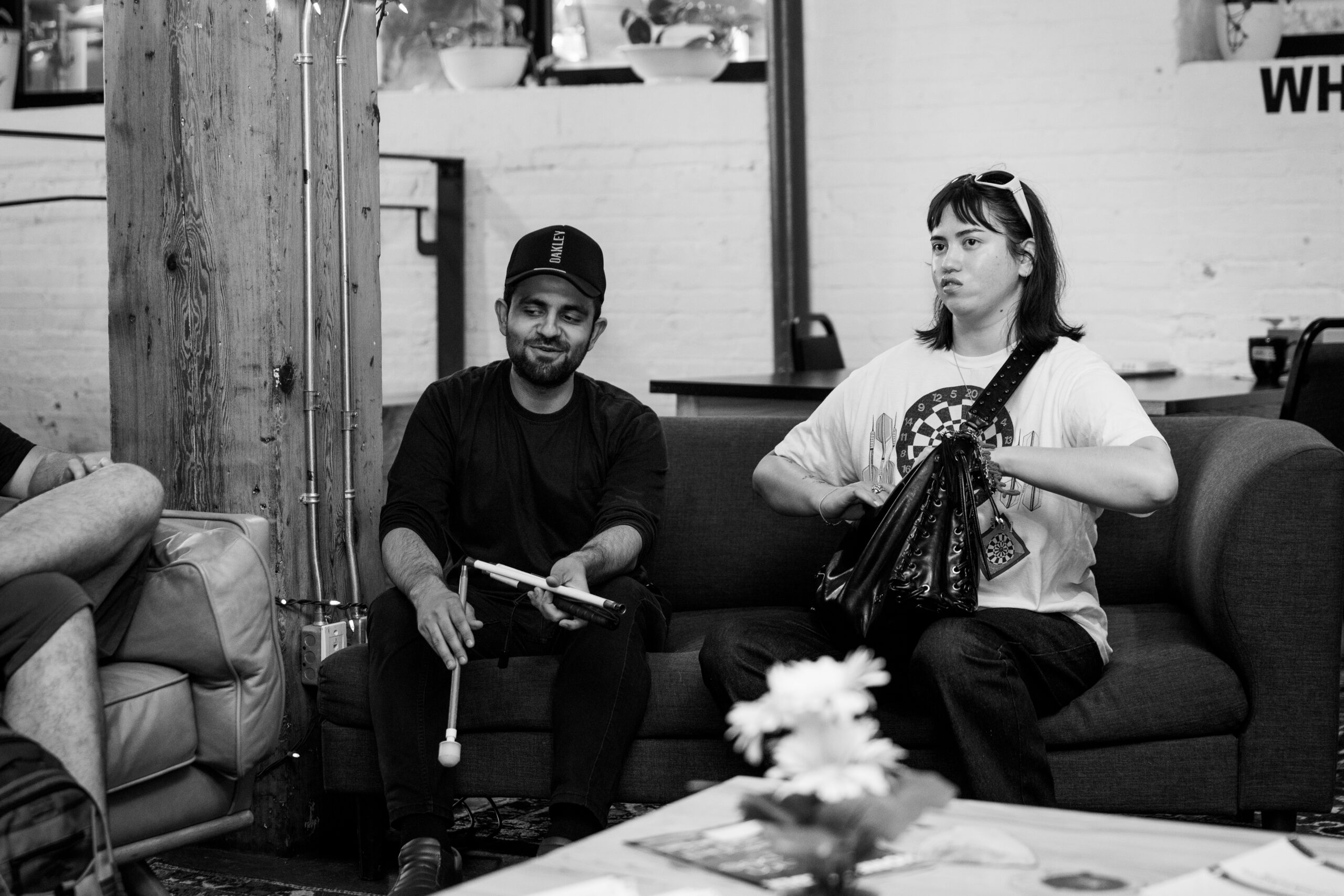
Social impact skills did not grow at all in the first half. Participants rated themselves at 5.3 before the program and 5.4 at the midpoint, essentially unchanged. Then they began their Activation Projects: real-world advocacy initiatives ranging from accessible community events to public awareness campaigns to peer support tools. From mid to post, social impact skills surged by more than a full point. The single largest gain at any time point in any domain.
This is not a coincidence. Participants do not develop social impact skills by learning about social impact. They develop them by doing the work. The Activation Project provides the doing.
“The ‘one small step’ mentality and being able to modulate the Activation Project to fit where I was at — that was transformative. I didn’t just learn what advocacy was. I did advocacy.”
For funders and partners, this matters: the three phases of FUTURES are not interchangeable. Each one builds something the others cannot. The Activation Project is not a capstone. It is the reason social impact skills exist in participants by program end.
Finding Two: Belonging Anxiety Dissolved
Ask any Disabled or neurodivergent young adult what they want from a program like FUTURES, and you will get some version of the same answer: a room where they don’t have to mask, explain, or perform an able-bodied version of competence.
What is harder to talk about is the anxiety many participants bring with them. It’s the worry that even inside a disability-focused space, they might still not belong. That they might be too different, too specific, too much.
The data on this finding is among the most statistically robust in the entire dataset. The reduction in “I worry I don’t have enough in common with others in my cohort” was significant and consistent across cohorts. It was paired with a significant increase in comfort discussing personal background, beliefs, and cultural experiences with peers.
Translation: participants arrived guarded and left connected. The space became theirs.
A space to be fully myself with no masking. To connect with people who just get it. I’ve been part of groups that tout inclusion but miss the mark. Futures did not.”
Belonging is not a soft outcome. It is a precondition for everything else FUTURES is trying to do: risk-taking, identity development, civic action, and leadership. The fact that belonging anxiety reliably decreases across every cohort, every format, and every season means the program is succeeding at its most foundational task.
Finding Three: Facilitators Are the Program
The data point that surprised even us: participants rated their facilitators’ leadership style at 3.72 out of 4.0 at the program midpoint. They rated it at 3.72 out of 4.0 at program end. The statistical test for difference between those two scores returned a p-value of 1.00. The scores were not close. They were identical.
In evaluation research, this kind of stability at near-maximum levels is unusual. It means that across the demanding second half of the program, when participants are scoping projects, navigating real-world accessibility barriers, and pushing themselves into new advocacy territory, the quality of facilitation did not slip.
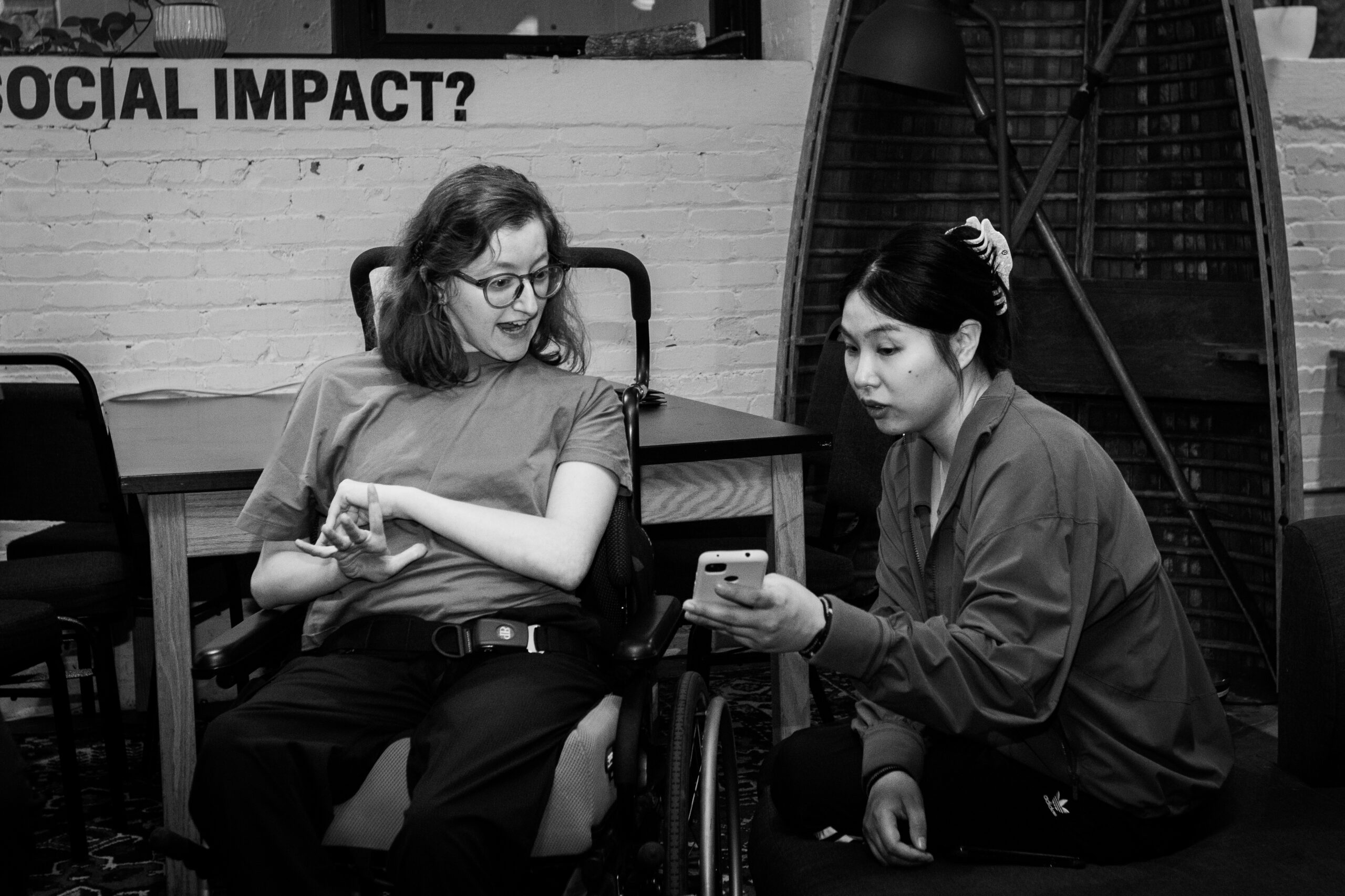
A few specifics:
- 93% of participants agreed or strongly agreed with every facilitation quality statement, at both mid and post.
- All five facilitator satisfaction items scored above 93% positive across all seven cohort groups, three seasons, and both virtual and in-person formats.
- The one item that increased significantly from mid to post was facilitator investment in participant growth — from 3.57 to 3.83 out of 4.0. Participants felt more seen by their facilitators as the program deepened, not less.
This is not the achievement of a single charismatic leader. It is the signature of a facilitation model that is values-driven, replicable, and structurally embedded in how AccessStudio designs cohort experiences.
Finding Four: Participants Leave More Ready for the Real World
The question FUTURES ultimately has to answer is not whether participants felt good while they were in the room. It is whether they walk out the door ready to do something with what they learned.
Compared to before the program, participants reported being:
- 93% better able to contribute to communities that matter to them
- 90% better at leading groups where people from different backgrounds feel welcome
- 76% more confident engaging in constructive dialogue across disagreement
- 72% better at responding to bias and discrimination
On self-efficacy, 96% agreed they will overcome challenges they face. 91% agreed they will achieve their goals. 89% felt confident in their ability to perform even when things are tough.
These are not generic confidence claims from people who have never tested them. They are statements from Disabled young adults who have just spent three months navigating real barriers to complete a program that challenged them on purpose, alongside peers who saw them clearly, supported by facilitators who held the space without flinching.
“Turn my lived experience into something powerful. That’s what this program gave me. It wasn’t therapy. It was training.”
Finding Five: Graduates Become the Program’s Future.
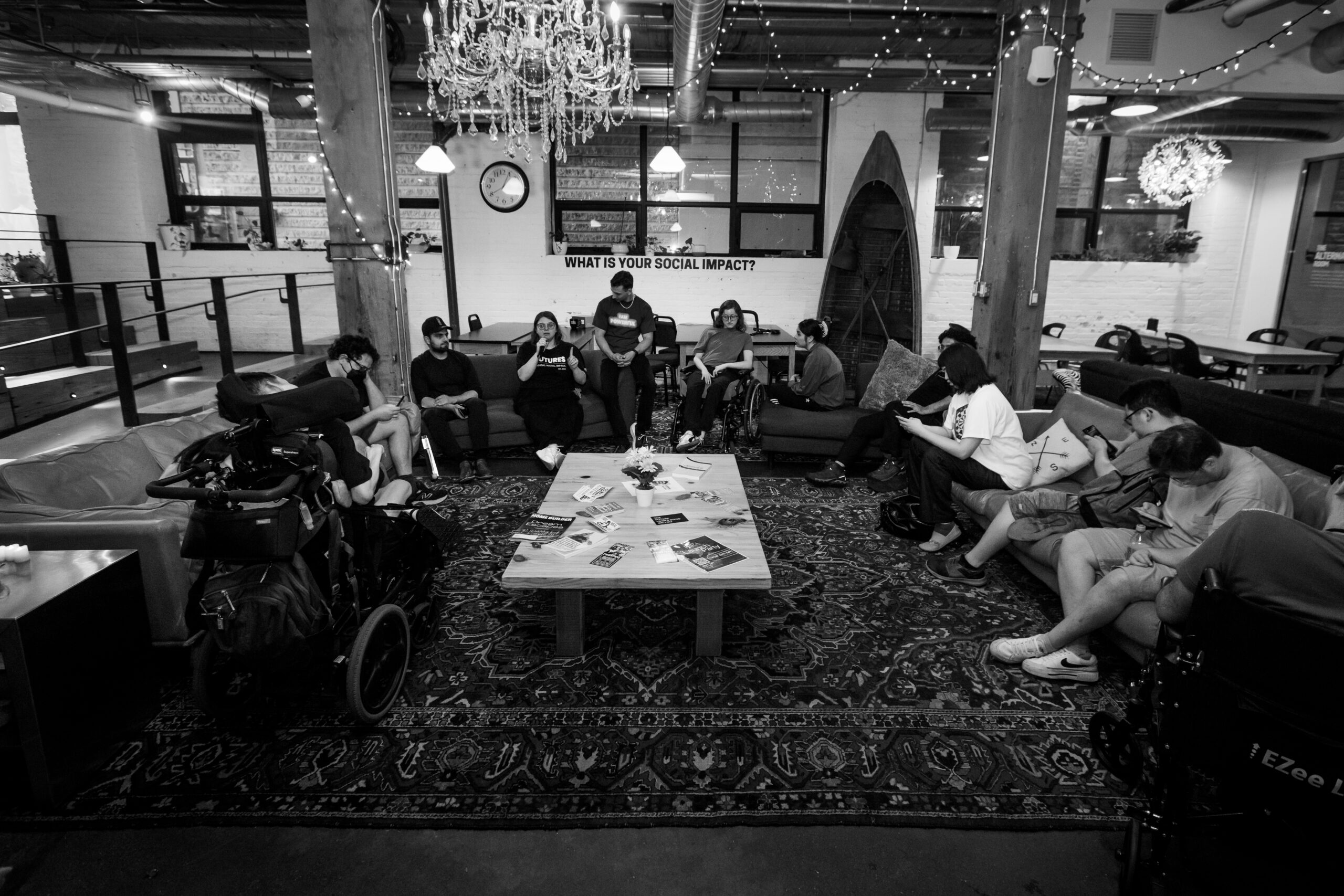
At the program midpoint, 91% of FUTURES participants gave a score of 9 or 10 out of 10 when asked how likely they were to recommend the program. The mid-program Net Promoter Score was +89, among the highest advocacy scores possible.
After completion, the NPS settled to +53. Still firmly in the “exceptional” range (anything above +50 qualifies, and the nonprofit sector average sits around +43), but lower than the mid-program peak. We see this as the natural transition from being inside an active community to being a graduate of one. The energy of belonging to something ongoing is different from the pride of having completed it.
What is striking: 76% of graduates want continued networking with Disabled and neurodivergent professionals. 61% of Winter 2026 participants volunteered for the alumni committee. 100% opted into alumni emails.
Every cohort that finishes FUTURES adds to the peer network, the mentorship pipeline, and the advocacy community available to the participants who come after them. We are not running an isolated three-month program. We are building a Disability leadership ecosystem in Canada, one cohort at a time.
What Are We Doing Next?
Three seasons of evidence have given us something rare: a clear picture of what is working and where to focus development. We are committed to:
- Bringing the Activation Project into the room earlier. Multiple cohorts told us they wished they had started scoping their projects sooner. We are listening.
- Building structured alumni programming, beginning with the professional networking the community has explicitly asked for.
- Creating more unstructured peer connection time in virtual sessions. Belonging cannot be fully scheduled. It needs space to grow.
Prioritizing racialized facilitators. 31% of participants identify as racialized, and multiple cohorts independently raised this need. Representation in facilitation is not a nicety. It is a belonging and trust issue, and the data points to it directly.
A Note to the People Who Make FUTURES Possible
This work is funded in part by Canada Service Corps, and supported by partners, mentors, guest speakers, and a facilitation team that the data tells us is doing remarkable work.
To everyone who has invested in FUTURES: the evidence is here. Sixty participants tracked from before to after. Three cohort cycles. Seven cohort groups. Both virtual and in-person formats. The patterns are consistent. The numbers are exceptional. The participants are leading.
To Disabled and neurodivergent young adults across Canada who are wondering if a program like this is for you: it is. And the next cohort is already being shaped by everything we have learned.
The work continues.
“FUTURES is not just a program. It is proof that Disabled young adults don’t need to be fixed. They need to be resourced, connected, and trusted to lead.”
Learn more about FUTURES and apply for an upcoming cohort at studio.accessnow.com/futures.
Latest on the blog

Families Want Accessible Travel, and They’re Willing to Pay For It
A new report from Fora, a network of travel advisors, puts numbers behind something many of us already know: accessibility needs aren't rare in family travel, they're common. And the travel industry still isn't set up to handle them well. Fora surveyed 2,592 U.S....
The World Works Better With Us – Disability Pride 2026
July is Disability Pride Month, and this year's theme is: "The World Works Better With Us." There's a real idea behind that theme, and it has a name: the curb-cut effect. It's named after those sloped ramps cut into sidewalk corners. They were built in the 1970s so...

Accessible Trails to Discover in the GTA and Beyond This Summer
Summer in Ontario means longer days, warmer air, and a whole province of trails waiting to be explored. Whether you're looking for a quiet, paved walk or a trail that keeps you busy and runs for kilometers, there's a route out there for you. We've pulled together nine...
